
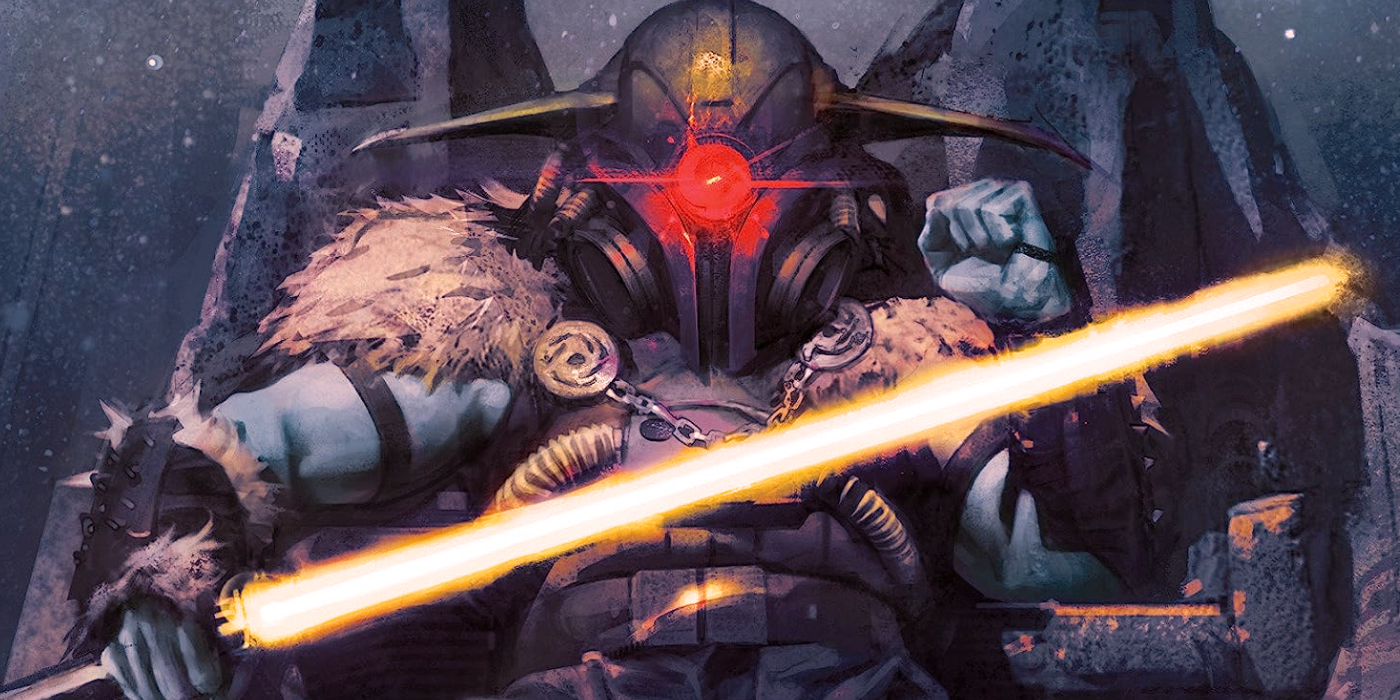
There is barely time for anyone to catch their breath in the first novel of The High Republic Phase Three, The Eye of Darkness; neither the characters who all find themselves at the mercy of an increasingly unpredictable Marchion Ro nor the reader who will struggle to stop reading or listening to find out what happens next.
George Mann made his High Republic debut in Phase Two with a bunch of contributions:
- One Middle-Grade novels (Quest for the Hidden City)
- An audio drama (The Battle of Jedha)
- A series of short stories in Star Wars Insider (Tales of Enlightenment)
Only Quest for the Hidden City was a miss, but that was first out of the gate, and every work after improved upon the last. The three main characters he introduced (Rooper Natani, Shilandra Sho, and Keth Cerepath) were some of the most endearing out of Phase Two. But how would Mann do with existing, beloved characters from Phase One?
It turns out he did pretty well, proving that he might have found a perfect balance between action and character development. Mann wastes no time in The Eye of Darkness, so let’s jump in.
**Spoilers for The Eye of Darkness**
The Story
A year after the Fall of Starlight has left Marchion Ro with plenty to celebrate. Shortly after, he closed off entire systems in the Outer Rim to the Nihil called the Occlusion Zone (OZ), which destroys any ship that tries to breach it without a Path engine. Elzar Mann is mourning the loss of Stellen Gios a year ago while also missing Avar Kriss, who is stuck in the OZ. Bell Zettifar is working with Burryaga (Burry) on the edge of the OZ to aid in distress calls from Nihil raids that are still happening. Chancellor Lina Soh is desperate to find a way to reach her son, Kitrep, who is also stuck in the OZ while holding off an increasingly fearful Senate that wants to open peace talks with the Nihil in hopes of opening trade routes within the OZ.
Meanwhile, Avar is trying to do what little she can to help starving planets who cannot pay the Nihil’s tithes they demand for food, stealing shipments from Nihil. On the verge of losing hope, she meets a Ugnaught pilot who helps to turn her perspective around. Meanwhile, Porter Engle is also in the OZ and devising his plan to get past the Stormwall using old High Republic technology from Phase Two while avoiding his enemy, General Viess (from The Blade comic series), the Minister of Protection.
Despite all this good news and a promise from Nihil representative and Minister of Information Ghirra Starros that the Nihil won’t attack to commemorate the Fall of Starlight anniversary, Marchion Ro has other plans. Ro broadcasts the death of a captured Jedi Grand Master at the hands of the Leveler across the galaxy. It is the time the Jedi see what the creatures look like, putting a face to their greatest fear. That theatrics from Ro sends ripples on both sides of the OZ as the Republic and Jedi Order race to try and find a way through the Stormwall. At the same time, divisions start to arise within the Nihil, highlighted through Ro and Ghirra’s discussions about the responsibility of the Nihil to the worlds they have siphoned off from the rest of the galaxy.
There is no build-up to an epic third-act confrontation. Instead, The Eye of Darkness is full of smaller external and internal battles, conveying the exhaustion of the Jedi and Republic. Mann wisely keeps the point-of-views to a minimum for an Adult novel, directing focus toward many key characters from Light of the Jedi. There are many references to Phase Two and little hand-holding (if you do not know who Marda Ro or Azlin Rell is, you might be confused). But the lack of heavy exposition does not mean there is no context, as Mann expertly weaves in the history from Phase One. Setting the story during the year anniversary of the events of Fallen Star ties the novel heavily to character motivations. Having several problems that the Jedi and Republic have to solve allows brief exposition on what other characters are doing (e.g., Reath Silas and Emerick Captor working on a way to defeat the Nameless). Porter and Viess’s history is also given context as we get both perspectives as Mann leads us to their inevitable reunion showdown.
The Eye of Darkness is not an entry-point novel for The High Republic (Light of the Jedi, Rising Storm, and especially Fallen Star are required reading). Still, it does reward those who have read both Phases with a fast-paced story that ties both periods together, setting the stage for a thrilling conclusion to this part of The High Republic.
The Characters
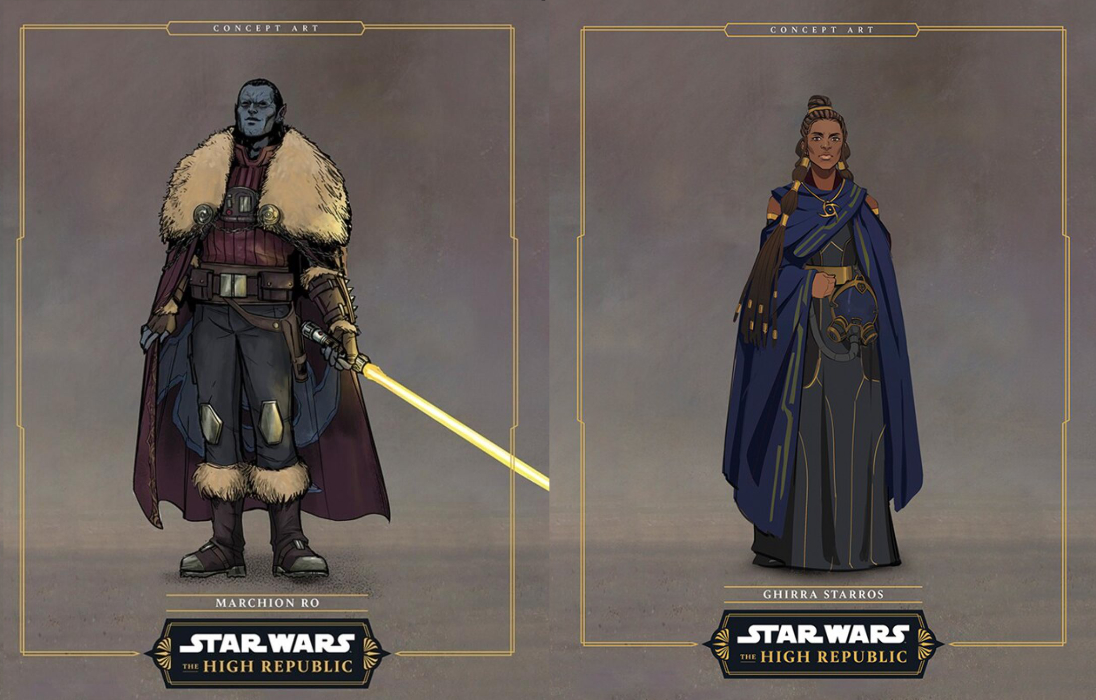
On the Nihil side, one might think that the title would indicate this is a Marchion Ro-focused novel. At face value, Marchion Ro is featured sparingly in The Eye of Darkness. And yet, this novel is all about him. Ro does not go on a character journey or arc (he has stayed true to who he is since we met him in Light of the Jedi), but he has changed the galaxy to suit his truth: No one matters but him. In doing so, every perspective in this novel must navigate the world he created, adjusting and re-adjusting to survive.
But the time we do get with Marchion Ro is fruitful in learning more about his mindset. He can still hear his father, Asgar Ro, belittling him from beyond and his ancestor, Marda Ro. These apparitions trouble him as he keeps mentioning how tired he is, and he starts making mistakes. Broadcasting Veter’s death puts a face to the creature for the Jedi, giving them additional information. Keeping Rhil, the Republic reporter, alive ultimately leads to Avar escaping and expanding the Stormwall, and engulfing more star systems, making the Nihil’s situation untenable. Does this big picture evade Marchion Ro because it is so closely associated with what he hates: politics?
The person closest to Ro who has the most insight is Ghirra Starros. At the end of Fallen Star, Ghirra has chosen the Nihil, betraying the Republic Senate by giving the schematics for Starlight Beacon to Ro, allowing for its sabotage. She is also Ro’s lover, though both use each other for different reasons. One year later, their relationship has evolved into a fascinating, contemptuous companionship and a window to the divisions brewing within the Nihil. Ghirra is increasingly disturbed by Ro’s theatrics and violence and tries to reason with him that he needs to start taking the idea of managing the needs of his people seriously. The two clash as Ghirra insists on evolving the Nihil into a political entity before the citizens of the OZ revolt. Ro despises politics and is angry at Ghirra for assigning Minister titles to herself, Viess, and his scientist, Baron Boolan (another character from Phase Two).
But Ghirra sees cracks in Marchion Ro’s standing and keeps pushing, going to Coruscant to negotiate a Senate seat for the Nihil for open trade routes in the OZ, which Soh rejects. Ro uses this to his advantage later in the novel to yield devastating results for the Republic. Still, Ghirra is validated when a member of Viess’s team secretly tells her a lot of Nihil agrees with her political approach.
Ro says throughout this novel that he has no desire for politics, and politics might bring him down. Ghirra has begun to understand the man she got into bed with (literally and figuratively) and his weaknesses. Now, she is potentially positioned to beat Ro at his own game. Ro tells her she is still alive only because she reminds him of what the Nihil must never become. Whether that is 100 percent true or not, the fact remains that Marchion has suffered a strategic loss at the end of the novel, and Ghirra is more hopeful. Good luck to the man who underestimates a woman who truly knows him.
General Viess is more of a mustache-twirling antagonist for Porter and feels like she is taking the place of Lourna Dee, who is still alive somewhere. Her protege, Melis Shryke, is a focus of Bell and Burry’s job as she is the main Nihil raider responsible for capturing the Jedi Grand Master, Pra-Tre Veter, whom Ro sacrifices to the Leveler in the novel’s beginning. How she factors into the rest of the Phase Three storyline is a mystery to me. One weakness of The High Republic writing team is they don’t quite know what to do with their young Nihil protegees who could draw interesting parallels to the young Jedi but are severely underdeveloped. Nan, who appears briefly, is not missed, and Krik from The High Republic Adventures might have run his course. We will see if the third time’s the charm.
On the Republic and Jedi end, each character tries to dig themselves out of the hole of despair with various results. Chancellor Lina Soh gets her best moments as she watches her vision for unity, including the mantra “We are all the Republic,” get perverted and thrown back at her by Ro. She is also a mother whose son is out of her reach and trying not to let that grief overwhelm her political duties. She and Elzar lean on each other and help them through their lowest moments. They have built a friendship over the past year that Mann conveys through their trust and honesty. Soh has to navigate a cautious Jedi Order that puts fighting the Nameless ahead of potentially breaking the Stormwall and a Senate pushing for concessions with the Nihil. Although shaken by the Nihil’s terrorism, she is still a sharp politician, cutting Ghirra with some truths when she arrives on Coruscant to negotiate. Soh was sidelined during Fallen Star, recovering from losing her leg in Rising Storm, so her more prominent role here is welcome.
Bell Zettifar has less to do in this one, but he still overcomes his low point (almost stranding Burry and his team in the OZ) with the help of Burry. Bell is compelling because he is self-aware of his flaws yet willing to listen to others, take advice, and improve himself. And he always grounds himself and his purpose when helping people.
Elzar Mann is perhaps in the worst state throughout the novel. Not only is he missing Stellen, but he blames himself for his death, having killed Chauncy Yarrow, not realizing she was trying to save Starlight. Mann uses how Elzar sees the Force (as waves crashing in the sea) to describe how much he is losing himself. Turns out, the sea is a perfect metaphor for depression. To make matters worse, he is also missing Avar, who left shortly after he confessed to her that he killed Chauncy. Thinking that this is why Avar left in a hurry (which we find out is not the case) drives him further into dark places. One of my theories during Phase One was that a well-known Jedi would likely turn to the dark side, and there are hints that it could be Elzar. There are similarities between him and Anakin Skywalker, but Elzar works through his dark thoughts here and seems to be in a better place; however, that might have more to do with his connection to Avar Kriss.
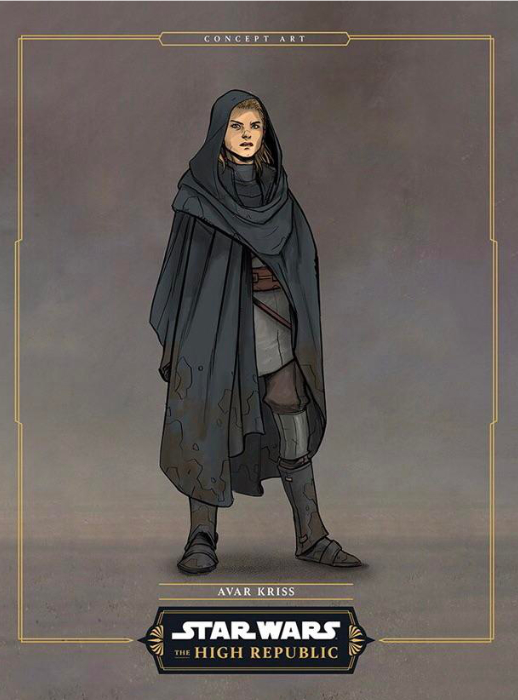
Speaking of Avar, this is a breakthrough novel for people like me, who have found it challenging to connect with her thus far. While she was a main character in Light of the Jedi, there was something still inaccessible, a coldness to her interactions with other characters. Then she was sidelined in the novels, almost nonexistent, and her storylines moved to The High Republic comics with Keeve Trennis. Unfortunately, the comics left much to be desired, focusing more on the Drengir (remember them?) and tying up loose ends with Lourna Dee.
“In truth, , she’d just been running away. And, in doing so, she’d abandoned those who needed her the most.”
George Mann. The High Republic: The Eye of Darkness. Random House Worlds.
Here, however, readers finally have access to Avar’s mindsight in the aftermath of the Fall of Starlight and a year behind the OZ. She did not run from Elzar Mann because he confessed his murder of Chauncey Yarrow. Avar was dealing with what she believed were her failings, leading to Starlight’s destruction.
So, during her time in the OZ, Avar has been trying to help citizens of the worlds punished by the Nihil for not paying tithes. Shedding her past moniker of Hero of Hetzal, the Marshal of Starlight Beacon is refreshing, but her connection to the Force has also suffered. And there is only so much she can do as the problems the Nihil have created have become systematic issues. Stealing a single grain shipment will delay a town’s starvation for two weeks but is not a long-term solution. Avar’s emotional support comes from Belin, a Ugnaught pilot of the cargo ship she commandeered from the Nihil.
Along with KC-78 (Kaycee), Estala Maru’s droid, the three come across a secret communication from Rhil Dairo. The Republic reporter from Rising Storm, who has been captured by the Nihil and forced by Ro to broadcast their propaganda, has been leading her own resistance. Dairo is working with a Nihil defector, Quith Meglar, to encode her messages for Jedi in the OZ that they have a way through the Stormwall. Avar takes them up on that offer, and so does Porter Engle. Their storylines come together in an unexpected but brilliant way through the droid Porter attempts to send through the Stormwall, and the two of them together are the final push they need to take on a Nihil raid ship. Porter and Avar’s approach toward the Nihil they encounter hints at their different experiences within the Jedi Order. Avar does not kill, instead jettisoning the two Nihil guarding the grain cargo in escape pods. With regret, Porter does kills a group of Nihil that corner him on Deadus, showing just how much more experienced (and weary) he has become. The elder Jedi has also been through so much more, and while the Nihil are new, their selfishness and disregard for life is not. Porter’s reminiscing throughout the novel of friends he’s lost during his long lifespan due to time and losing his sister, Barash, certainly felt like a foreshadowing of his death. And however impossible it may seem that both he and Viess survived her ship getting torn apart, this is Star Wars. Characters have survived worse situations.
Canon Contributions

During Phase Two, when Marda and her cousin, Yana, saw their former lovers, it was written to be ambiguous on whether they really could see them. The only thing out of character was Kevmo speaking to Marda. Star Wars already has the existence of Force ghosts, so it is not a stretch that a specific species can communicate with the dead. There must be a reason it consistently gets mentioned, and I hope they explain whether it is real or just a manifestation of their thoughts.
I did not realize that Mirialans had THAT long of a lifespan, but Viess being in both Phase Two and Phase Three suggests that they can at least live 150 years. Add them to the list of species along with Wookiees and Ithorians.
Speaking of Ithorians, the Minister of Advancement, Baron Boolan, is also from Phase Two, where he was just a child member of the Nihil’s previous iteration, The Path of the Open Hand in Cavan Scott’s Path of Vengeance. Boolan’s experiments are now waiting in the wings as a wild card. He is modifying the Nameless to be even more unstoppable, which does not bode well for the Jedi’s attempts to understand them with the help of Azlin. Also, what is going on with these Force-users that have been experimented on? Are some of them captured Jedi?
Azlin Rell also feels like a setup for more canon lore with what he’s been up to for over 150 years. Whatever dark side abilities he used could be tied to the return of the Sith and whatever might be in store in The Acolyte series taking place at the end of the High Republic era.
Every hero in this novel is chasing a “win” against the Nihil after a year of losing. Meanwhile, the Nihil are experiencing an identity crisis that comes with success, and many are suddenly feeling a sense of self-preservation. Marchion Ro is chasing something else entirely.
George Mann has expertly placed the pieces on the chess board for an intriguing final chapter that will span the longest of all phases. The Eye of Darkness will be tricky to top, but I am sure the team is up for the challenge.

 Credits and Canon